lots of water under the bridge since i last posted, and to get my feet wet again i'll talk about something a bit different from the usual quaker blog-- Land Speed Motorcycle Racing.
land speed racing is a passion i've had all my life, and only in the last several years have i actualized it into something real. in LSR, you take a machine-- any kind, any configuration-- and you build it into something that goes as fast as you can make it go. then you take the machine to a track, perhaps a salt flat, a dry lake, an old airport runway, and you fly it down the line.
there's nobody else on the track with you, there's nobody waiting with money if you accomplish anything significant, and there's nothing to gain in recognition except among a half-dozen people world-wide who pay fierce attention to what you do.
sort of an internal landscape, if you will. quakerism turned into a racing machine.
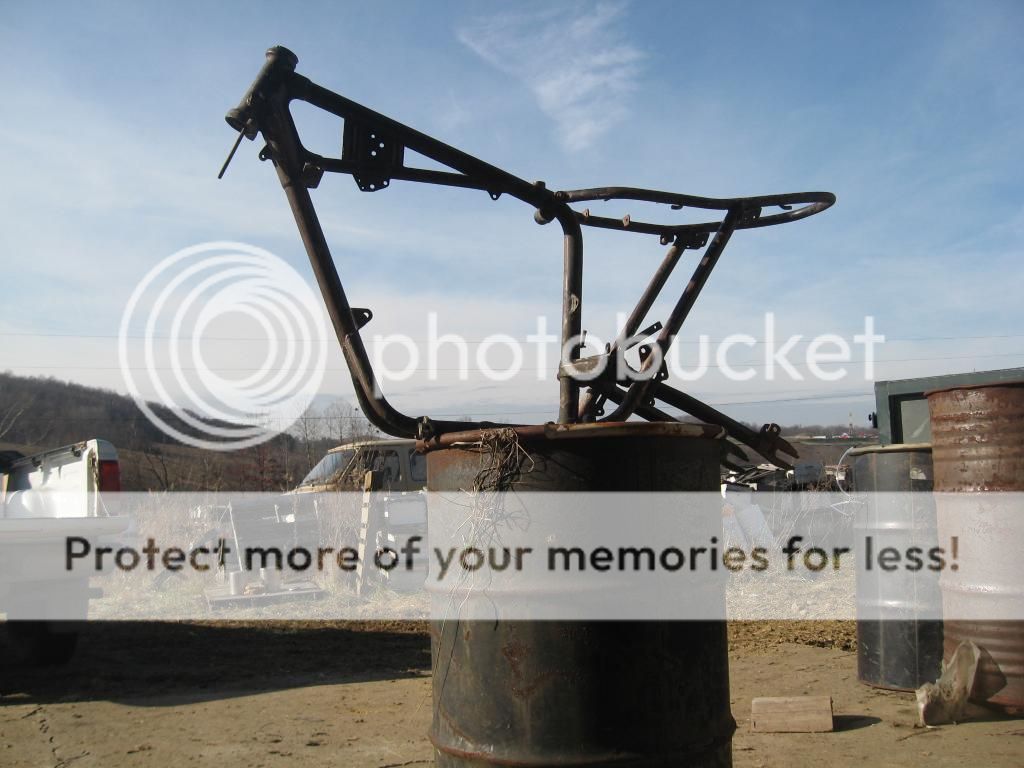
my own journey has been amongst the ancients. i race a motorcycle first built over fifty years ago: a triumph bonneville. this motorcycle first saw the light of day under that name in 1959, and the machine i ride is a 1965 vintage, sort of:
it started a bit sparse a few years ago, but i quickly added a motor:
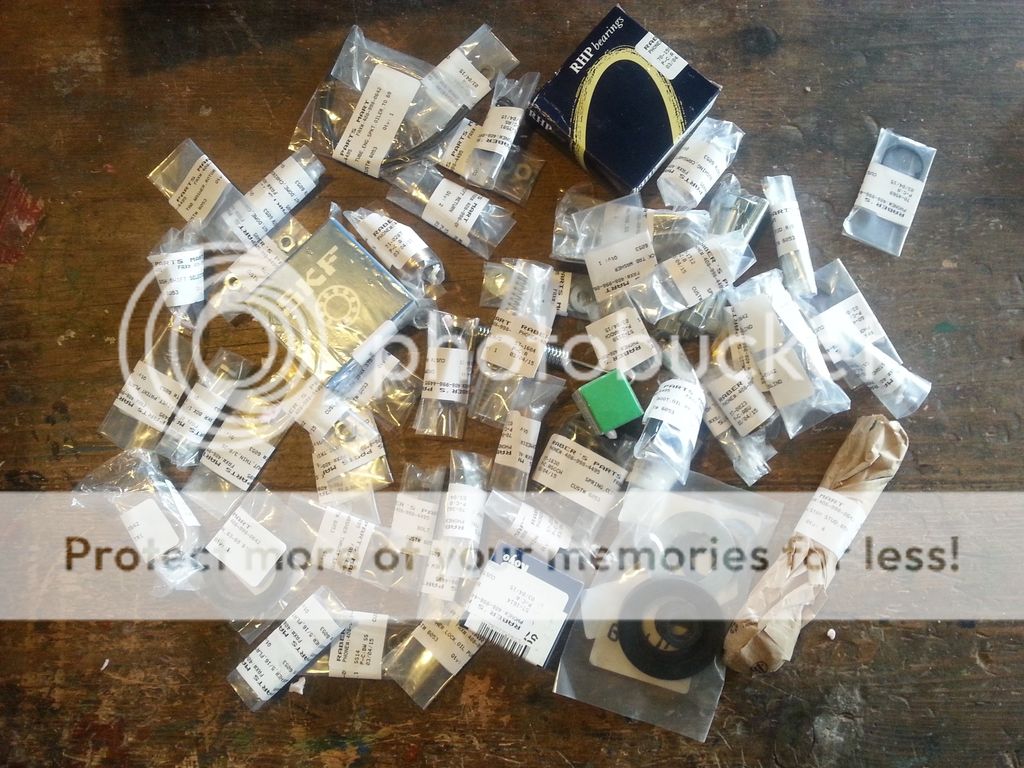
and various internal components:
. . . and now i have something that may move by itself:
this 50-year-old machine ran 110 miles per hour earlier this year, until a magneto rotor broke. i have since rebuilt the faulty components, and towards the end of september this year will take it back to the track and see where we are.
to be competitive i have to look for 130 miles per hour. not a lot, by modern standards, but then i'll be riding a vehicle designed in the 1930s, with only minor concessions to the progression of the twentieth century.
A few days ago was a holy day for our family. Not holy in the religious sense, which as Quakers we tend not to spend a lot of time over, but holy in the old Hebrew sense of being “special.” Today was the day we went over and took a look at the Spring Chickens.
They’re not really chickens, at least not yet. So far they’re just chicks, just baby chickens. Chickens tend to reproduce according to a schedule fixed by the increasing day length of the approaching vernal equinox, which means that they tend to show up in the spring. That makes a lot of sense for a bird that has to be able to find enough tender young plants and hatched-out insects to grow and take on the world before very many days have gone by, and so young chickens tend to show up in the springtime. I have heard it said that the term “Spring Chicken” once had a specific economic implication, in that the fryers and broilers that people brought to market were distinguished by being “Spring Chickens,” (hatched that year), versus “Something Else Sneaked Into the Crate,” (like last year’s left-over chickens, which were not quite so desirable). Whether this is true, or whether “Spring Chicken” just meant one that’s pretty young is beyond me. But I do know that newly hatched Spring Chickens are adorable, inexpensive, useful projects for five juvenile Quakers, and make great food for Burmese Pythons. And springtime comes just once per year.
When chickens get ready to break out of the egg, they finish up the last of their development and absorb the last bit of yolk from outside their body. This little bit of moist nourishment is what gives precocial birds like the Galliformes the wherewithal to jump up and run after momma just a few minutes after hatching, like quail, and ducks, and other ground-nesting birds. And if you think about it, getting up and taking off is a pretty important thing to do if you hatch out at eye-level with rat snakes and possums and such. That last little bit of yolk is also what makes it possible to hatch out a bunch of baby birds, drop them into a cardboard box, and then take them to the Post Office to be mailed around the country, like so many Christmas presents, or Valentine’s day cards, or all those other things that non-Quakers associate with the holy days we don’t observe, or at least didn’t used to, or maybe just sort of don’t pay as much attention to now. Something like that, anyway. A box of chicks can be shipped through the mail with a reasonable expectation of profitable survival at the other end, so that’s how it’s done.
The significance of all this to us is that this is the year That We Are Going to Have Chickens Again. Before we had a lot of kids, Shawna and I lived on the edge of a canal bank out in California’s Central Valley, and we had chickens. Lots of chickens. We moved into a trailer in the middle of nowhere and inherited a lot of culture from the previous residents, who were from way in the middle of another nowhere in south Mexico. Among these left-over items were a hand-made clothesline, laboriously braided from many pieces of bailing twine, an industrious stack of concrete slabs upon which to beat our laundry clean, and chickens. They were not ordinary chickens, either, but were Mexican fighting chickens, the kind that were bred specifically for chicken-to-chicken combat in the arena.
These were amazing birds, beautiful dark roosters with golden collars, high combs, terrific spurs, and terrific attitude. They spent their time crowing, herding their personal harems of brown, tan, and orange hens, and engaging in spectacular bloody and often fatal fights with each other. The fights were inevitable, and served to keep the population of chickens down somewhat. I say only somewhat, because these Mexican birds were spectacular not only in their abilities to die, but also in their abilities to raise chicks. The hens were all broody, all of them, seemingly all the time, and would successfully hatch out clutches as large as ten or eleven chicks, over and over. Some hens would disappear for a few weeks, and then reappear with more than a dozen yellow chicks trailing behind them. These hens were mostly wild, and along with the roosters would spend the nights up in the eucalyptus trees, out of reach of the striped skunks and coyotes that otherwise did their best to limit the numbers of chickens too. But the little chicks couldn’t get up into the trees, so their mothers would gather them up in the tall grass in the evenings and spread their wings over them all, doing their besto keep them dry in the spring rainstorms that added hypothermia to the hazards of being a Spring Chicken.
We started out with seven of those birds in the first winter, and by the next fall they had ballooned into a noisy flock of over 60 birds, of which more than half were beautiful roosters, ornate, loud, and vicious in their interpersonal relationships. The coyotes, skunks, chicken hawks, and rainy weather took them down to about a dozen by the following spring, but then they blossomed back up into another flock, this time over 70 birds. The population booms and busts were distinctly tuned to the seasons, to the hazards of being a chicken in the country, and were at best only somewhat under our fairly hands-off control. Under a philosophy of benign neglect, we tended to let the chickens do what they did best, which was to live out their lives in our company mostly as picturesque companions out on the canal bank, along with a vast menagerie of other neighbors. We provided feed, grit, and nominal protection from the skunks. The dogs kept the coyotes away on a part-time basis. We couldn’t do much about the hawks, but they had trouble lifting more than the smallest of the birds, anyway..
But these elegant fowl provided us with an endless supply of eggs, and a source of fresh meat for our neighbors and for some of the members of our meeting who didn’t mind being handed a headless, half-plucked dead bird a few minutes before worship. So there were advantages to sharing our canal bank with chickens, after all, besides the entertainment value, or the novelty of returning home to find a freshly-laid egg on the bedroom pillow, or on the kitchen table.
And this is where we return to the current story. I’m a vegetarian now, so I don’t eat chickens any more, even the unhatched kind. But there are five growing primates in my house now, most of whom are quite happy to eat a chicken. Two are teetering on the edge of vegetarianism, but haven’t yet made the leap into grass-eating that I committed to years ago. So I think along with my practical and lovely wife, there are enough mouths interested in eating chickens in my house that we decided to go ahead and finally get some more.
And so we gathered up our own brood off to the farm supply store, and looked down into the yellow mass of baby chicks scrambling about under the heat lamps inside the watering troughs that the store personnel use in preference to the more universal but less sturdy Cardboard Box. The kids all peer into the tanks, ogling the babies, like looking into the middle of a glass-bottomed boat, except with less water. There are a several different kinds, mostly about a week old, I judge, with developing pin feathers in the wings. That’s good—if chicks are going to die from the stress of handling, they’ll do it sooner rather than later. These older birds will be strong stock and hardy.
“What kind of chickens are these, exactly?” I ask because I know that there are more different kinds of interesting chickens than there are stars in the sky, but I’m looking for cold-hardy free-range breeds, with hens that go broody and love to roost in the trees. No need to reinvent the wheel, after all.
“Farm supply store chickens, mixed, Reds, Bantams, Cornish, you know, whatever was left over at the hatchery that was cheap that day,” says Shawna. “These are the sexed pullets, and those over there are straight-run, pullets and cockerels mixed. The straight-run is cheaper, so that’s what we’re getting. But not today. We’re just looking, today.”
This sounds good to me, because I know from years of experience with smaller animals that they love to die, and that chickens are as bad as hogs in terms of dying in immense numbers, just not with as much devastating financial costs per animal. And right now we don’t have as much as a wire pen to put them in. So if we’re just looking at chickens, then that’s the best of both worlds, all the benefits without the long term commitment.
“I want you to build me a moveable pen that I can pull around the property,” says Shawna.
Uh oh.
“What kind of pen,” I ask, carefully. “And how big?”
“Just something about eight feet long that I can put the chicks into until they’re big enough to fend off the cats.”
“I can do that. You want a little hoop-house made of poultry netting, right?”
“I’ll show you when we get home.”
And so I’ll leave the rest of the visit for discussion at another time, the debates about wood versus metal fence posts, and which garden vegetables, and whether to fence the donkey in or the goat out, if we should begin construction on the giant bat house this year, and all the other various discussions that naturally come about in the spring time at the farm supply store, including my observations upon chicks and Burmese Pythons. Because it’s more important to live life than to plan it, sometimes, and I know that by the time we get home the peepers will be calling down by the creek, in the clear and chilly water tumbling down the evening-shaded channels from the springs on the western ridge. I love to walk down to the water to hear the peepers in the spring, the smallest and the loudest of the amphibian heralds of the new year.
The afternoon is hot and muggy, a sunny day floating halfway between spring and summer. I’m back at home for a few days out of the truck. Shawna pokes her head in the door, looking at me where I sit peacefully vegetating.
“We’re all going down to the swimming hole.”
“Okay.”
“You’re going, too.”
“No.”
“Yes, you are. You have five children you haven’t seen in two weeks, and they want you to go swimming with them.”
“Okay.”
Such are negotiations in my household. Sometimes they take longer, but they often follow this general pattern. And really, I don’t have anything against being cooperative, but I learned long ago that when I receive a marital ultimatum, it is very important that the initial response be “No.” This is mostly because it’s always easier for me to reverse myself and say “Yes,” than it is to change a “Yes” to “No.” But also, I am married to a strong-willed, left-handed, yellow-headed bark-eater who is both wonderful and accustomed to being in charge, and starting out with “No” reminds her that in the end, I don’t have to do what she says just because she says so. Not at first, anyway.
But the swimming hole is a wonderful asset to raising children out where we live, and she is right to stand there with her hands on her hips and stare crossly at me from the doorway. Here in Appalachia, there is water everywhere: springs, rivulets, brooks, creeks, rivers, lakes, and swamps, and it’s a sin not to take advantage of it. Our own property is bounded to the east by a deep ravine that funnels all the spring water for several miles into one channel that runs out by Jim and Jan’s place to the south. It crosses over the road at a submarine bridge, and then dips under it under a real bridge half a mile farther on. When it emerges from under the second bridge, it pours over a little waterfall into a large, round, and deep pool: the swimming hole.
Our swimming hole is pretty different from the typical city swimming pool. First off, of course, the hole is natural, with all the advantages and disadvantages that come with that. In town, swimming pools have clean tiled edges and concrete walkways. Our swimming hole has smooth gravel on the bottom and sandy banks between the water and the surrounding woods. In town, the municipal employees keep the grass mowed and the weeds pulled. In the country, the thistles scratch bright red runes on your bare legs like bored Vikings as you pick your way through them to get to the water. In town, there are fences to keep intrusive animals away. In the country, we walk around the swimming hole to look for the muddy footprints of the deer, raccoon, possum, and woodchuck that visited the night before. And in town, the water is cleaned and chlorinated by mechanical filters and chemical injectors. In the country, our swimming hole is full of algae, and sediment, and sticks, and green leaves. Fresh spring water is aerated by cascading over the stones and ledges of miles of open flow. And stuff lives in it, around it, and visits it whenever we’re not there. And sometimes when we are.
Today, we drive down to the swimming hole accompanied by only one dog, loping alongside the beat-up van as we clatter down the gravel road to the creek. Normally there are three dogs, but the two older ones apparently have other tasks this day. The swimming hole is only a mile down from the house, and we walk to it in the evenings all the time. The exercise this afternoon would do all of us some good, especially me. But somehow piling into the car makes it more of an event for the children, so that’s what we do. When we stop the car, the kids jump out immediately and climb down the bank to the water. Golden carries the little inflatable life ring he has brought down with him. Starbuck grabs his new fish net and makes a beeline for a position from which he can ambush the local wildlife. The dog snuffles through the ferns and lilies looking for mysteries to solve. I take off my shirt, pry off my sandals with my toes, and walk down the bank to the water and step in. Then I wade slowly through the gentle current out into the middle, where the water is up to my chest.
It’s cool, but not at all cold, and the flowing water is very comfortable in the hot and humid afternoon. The current keeps the water stirred up, so the temperature around my feet is as comfortable as the temperature around my middle— very unlike a lake, where the stratified water means your toes are always chilly. I sink down over my head, then surface and shake the water off my face. Ankle-deep in the shallows with her skirts hiked up, Shawna leans out to catch the dog by the collar, and then industriously begins to work over his neck, looking for the ticks he can’t scratch off himself. Always the practical woman, I observe, scratching myself absent-mindedly.
“Dad! Throw me!” shouts Paoli. I look up to see her waving both arms at me. I slip through the water, then pick her up bodily and throw her as high and as far into the middle as I can. She goes under, then surfaces, grinning and bouncing on her toes to keep her face above water too deep for her to stand in. It won’t be but a year and she won’t have to bounce to keep her head above the surface, I think to myself. All the kids are growing pretty quick. It’s made more obvious to me now that I only see them for a few days each month while I drive a truck, fighting a losing battle to try to keep them in shoes. Every time I see them they all seem to be taller, thinner, more aware, and more sarcastic than the last time.
“Throw me too, Kevin,” says my oldest son Griffin, eyeing me speculatively.
“Not on your life. You’d break me,” I reply. “You’re taller than Shawna now.”
“I know,” he says. He turns away and paddles over to the girls so he can pick a water fight with them.
He has become significantly taller than Shawna, I notice, as he stands and initiates sibling combat. It seems like just yesterday he was learning to talk. Maybe someday soon he’ll learn how not to.
I sink back up to my neck again, and then turn and tip-toe slowly through the deeper water over to the bridge. The bridge shelters a wide but shallow concrete spillway, a low-roofed shaded cave with the gentle stream overrunning the floor. Under a few inches of water, the smooth slab is blanketed in dark green filamentous algae, all stretched out straight in the current, wiggling their tail-ends in the little waterfall, there at the boundary between the dim and the brighter light. I climb up onto the slab and stretch out in the flowing water, wiggling my tail-ends in the little waterfall as well. I could stay right there all afternoon, but my biology-minded Number One Daughter has other plans.
“Dad! Did you see the snake?” Devra hollers.
“What snake is that?”
“The one that lives in the crack over there between the rocks.”
The kids return to their splashing and wading, while I reluctantly rise out of the current and wade over to the corner of the bridge. Down here closer to the creek, it’s always appropriate to check out snake discoveries. We don’t have copperheads up on the ridge top, but in the shady hardwoods the beautiful gray and brown pit vipers are a reasonably common discovery under the decomposing logs and between the stones that crop out in the ravines. I sink way down into the water, and peer into the narrow crevice between two of the old concrete highway slabs our township stacks up to make bridge abutments. There in the half-light, a small Thamnophis stares back at me impassively out of one eye, the little waves reflected from my own body sending small sheets of water across the few inches that separate us, rocking it very gently.
I stand back up. “Garter snake!” I announce to the kids, who have forgotten all about the snake and are busy splashing water into each other’s faces. The little garter and ribbon snakes are much commoner than the vipers, and generally hang out close to the water to pick off the frogs and tadpoles. They’re good-natured creatures, although they generally defecate on you when you first pick them up to remind you that they’d really prefer to be left alone. I sink down into the water again and look back into the darkness. The little snake has disappeared, having apparently decided that being left alone today might be more difficult without some pre-emptive action on its own part.
A kingfisher suddenly rattles overhead across the stream, halfway between the water and the treetops. There’s lots of different kinds of birds here by the swimming hole, most of which are off in the branches or underbrush right now waiting for us to vacate the premises. There’s a great blue heron, or maybe two, that come back every year to live through the spring and summer in the brushy, more private parts of the creek farther upstream. In the undergrowth you can sometimes spy a woodcock with her babies, little feathered miniatures of their mother. If you surprise them, the hen will fly into the shrubbery but the babies will squat down and peep, waiting for their mother to come back and gather them up. At the moment all I can identify is a robin, calling in that slow-paced maniacal lilt that they favor, away up the slope towards the ridge top. Were I to come back and sit here very quietly, I would undoubtedly be treated to a psychedelic show of eastern passerines: tanagers, orioles, warblers, buntings, finches, and who knows what else, drinking or bathing at the edge of the water. Maybe even Paoli’s yellow parakeet, the one that unaccountably opened its cage door one day and flew through the front door into uncertain freedom.
None of those are around right now, though, so I step up out of the water to see what else is visiting the swimming hole today. Down by the tail end of the pool, the banks narrow in and the current speeds up as the water forces its way down the rocky channel. There in the taller weeds and thistles, a dozen dark and iridescent damselflies are hunting moths and mosquitoes. They’re all the same species, fairly large with glossy black wings and bodies, and blue highlights wherever the light is reflecting. I look closely at one perched on top of a bent blade of grass, and see it carefully munching the remains of a midge of some sort. The damselflies are very different from the dragonflies—the darners and such that also reproduce and hunt in these pools. You can tell a damselfly when it alights for a rest because it will fold its wings together above them like an old Navy fighter plane, while a dragonfly will rest with its wings held out horizontally. This particular species is also apparently a weak flier, always choosing to hunt in the quieter air within the woods, while the dragonflies can be found more or less anywhere their powerful flight systems might take them. They’ll hang out here for the rest of the season, flying, eating, mating, and dying, an annual cycle that’s been underway for millennia.
As I watch the damselflies flutter back and forth across the creek, I feel a gentle, inquisitive nibbling at my ankle, down in the water. Minnows, usually. There are various species of shiners and suckers in the shallow water, and this late in the year the little darters in the riffles will also be a few inches long. I look down, but the water is too natural for me to see more than a foot or two below the surface, so the identity of my visitor remains a mystery. It could be a crayfish. We have lots of those in here as well, and once we even tried to keep a pair of them in our fish tank for a while. They’re not really compatible with the fish, though, as the crayfish proved to be expert minnow-catchers, and quickly reduced the fish population in the tank to near zero. The crayfish are too fast to catch with Starbuck’s dip net, and we usually only get them by accident. Now, if I had a seine, then we could really work the creek over to see who and what made its home in there. But that will have to wait. Starbuck has decided to wait, too. He’s taken a Styrofoam boogie board and stuffed it into the back of his T-shirt, and is now lurching across the surface like some sort of aquatic Quasimodo. Golden is faring much better in his inflatable ring, navigating the entire pool with the happy competence of a six-year old tool-using primate. I remember doing the same thing myself, long, long ago in a swimming pool out on the Kansas prairie.
I step over to the bank and up onto the cobbles than line its edge, and that poke sharp little dents into my feet. Most of the stones are homogeneous gray limes and yellow sandstones, which of course is only to be expected, because that’s the rock that the stream is cutting through all the way up its ravine to Dave’s place on the hill above us. The pebbles and cobbles here are an endless source of road metal for the township, which is good. The township has 86 miles of road to take care of, and virtually no money to do it with, so free gravel is always a benefit. Old Melvin Kemp will come down to the creek with the township’s front-end-loader, with his brother Kenny driving the dump. Melvin then steers into the water and loads up enough gravel for the day, and then he and Kenny go deposit it uphill on our road. Of course, when it rains or when the snow melts the same gravel and pebbles tend to roll and slide right back down into the creek, so perhaps one of Melvin’s grandkids will scoop it up again from the same spot in another fifty years for some future road project yet to come. Come to think of it, I haven’t seen either of them for some time. I wonder if the township has run out of money completely.
Above me the slender but towering black locusts shade the swimming hole from the sun except for the brief hour or two when it is directly overhead. The locusts are wonderful trees, tall, straight, and quick-growing. The wood doesn’t rot in the ground, either, so they make tough and long-lasting fence posts. And as an added bonus, in the spring they produce thousands of beautiful pendulous flowers, which you can smell a mile away on the warm, humid nights. I have a tin can full of locust pods that I picked off a tree at an Amish sawmill I loaded at last summer. I meant to plant them in the spring, but missed my window, and now I’ll have to wait until next year. Planting trees is a hobby of mine around here. I scatter hundreds of tulip poplar and maple seeds along the roads and the edges of the woods every fall, and also toss all the peach and plum pits out into likely spots whenever I have them. I’ll be long dead by the time any trees reach full size, but then, that’s no excuse for not doing necessary work right now. People take being dead far too seriously, in my opinion. If anticipating being dead meant you shouldn’t be doing worthwhile work, then nothing would ever get done.
I’m brought back into present time by the kids shouting happily at each other in the water. Shawna is standing over on the bank with her skirts still hiked up, surveying the scene like Pharaoh’s daughter inspecting the Nile for crocodiles. The dog, released finally, wanders back and forth along the edge, searching for raccoon sign in the shallows, and the waterfall continues to murmur quietly to itself under the bridge. A peaceful, complete, and fleeting afternoon in the springtime.
The afternoon won’t last, and neither will this little swimming hole. It never does, because transience is the nature of things. Towards the middle of the summer, the rains begin to fail, the springs give out, and the flowing creek flickers finally into isolated pools and gentle trickles. The cool water warms up and loses its oxygen, becomes shallower and murkier, and swimming here becomes a less popular event. But that’s far into the future now, months away, and today the swimming hole sparkles at its peak of late spring glory.
Shawna was right to pressure me to come down here today, because this brief intersection of all our lives is now stored forever in my mind. Many years from now, when the kids have children of their own and the world has turned a few thousand times more, I’ll still remember this day: the children, the water, the stones, plants, and animals. And living out here so far from anyplace anybody else wants to be, the swimming hole itself will likely be more or less the same, but with grandchildren and great-grandchildren hollering and splashing under the bridge.
And maybe another snake in the crevice will look out at them, and decide to wait until the evening to come out to hunt frogs.
It’s morning on the ranch. After we feed the stock, Roger and I check with Joel to see what he wants us to do for the rest of the day.
“First, I need you to go get WinWin,” says Joel. “It’s time to measure his horns.”
And so it begins . . .
WinWin is a fully-grown Longhorn bull, currently out with the cows across Muskrat Road from the big house. Dickinson Cattle Company is the largest Longhorn breeding ranch in the United States, and happens to be in Barnesville, Ohio, about twenty miles from where I live. For a while I had a job there as a cowhand, one of the things a Quaker can do from time to time, when he lives in the country. If I lived in a place like Philadelphia, I might have a different job, maybe a school teacher, or abbot of a Quaker monastery. But I live in the country on purpose, and one reason is because I’d rather punch cows than be tempted to punch people.
Cowboys tend to look a bit different from what many people expect. I don’t wear a cowboy hat (unlike various of my recent ancestors), but I do use a leather thong threaded through a couple of grommet holes in my Amish-made broad-brim to let it hang down my back, which fits in with cowboy chic. And I’ve worn cowboy boots ever since I was a kid, given a choice. I’m from Oklahoma, after all. But otherwise I look more or less like any normal plain-dressing Quaker, rather than a cowhand. Most people seem to picture a cowhand looking more like that old picture of my Uncle Willie, there to the right, all saddle leather, lariat, and dramatic moments. And I suppose if Uncle Willie were still around, he might agree. Certainly his photograph is pretty impressive. But I expect that most cowboying back then was as routine as it is now: feeding cows, herding cows, sorting cows, medicating cows, finding lost cows, finding lost calves, building fence, digging holes, and on and on. Chores are always divided up, and my own personal task every morning and evening was feeding the bulls in their stalls and shoveling manure. Did you know that a full-grown Longhorn bull can fill an entire 7-cubic foot wheelbarrow full of manure every day? And somebody has to shovel it. The bulls just ignore you while you work around them, because dealing with manure once they’re done with it is beneath them. And as an annoying monkey, you’re frankly beneath them as well. Except when you get told to do something unusual, like to go get WinWin and put him someplace where you can measure his horns. Then you have to deal with them on different terms.
WinWin was out doing his job. Hanging out with the cows, waiting for the few fleeting hours when they would go into a standing heat, and then making sure that they delivered a pedigree calf later in the season. That’s what he was good at, and WinWin took his job seriously. Roger knew about where he would be, so we mounted up the four-wheelers and rode off.
Dickinson Cattle is a modern cattle ranch. Seven hundred cows and calves, four or five ranch hands, four or five four-wheelers, three moldy saddles in a trailer, and one horse. The horse was wise to ranch work, and spent most of his time avoiding people. Not a problem, as the cowhands preferred the ATVs. No catching, no saddling, no bridle, no cool off, just turn the key on to go, and turn the key off when you’re done. Simpler, and much more to the liking of the horse, who would make himself scarce anytime anybody looked like they might get close enough to actually put a bridle on him.
It was a beautiful spring morning in the month of May. We puttered down the lane between the fenced pastures, stirring up a little dust behind us in the warm air, passing late mustards and locust still in bloom, occasional sky blue chicories to the sides, the cherries and elms on the slopes and behind the fencelines in full leaf. A warm breeze blew over the green pastures, carrying the smell of sunny meadows and cool shady woods, water-wet creek bottoms, and murky cattailed sloughs. Longhorns are descended from the cattle brought to the Americas by the Spaniards centuries ago, and are lean and very self-sufficient, with several centuries of evolution to adjust them to the dry climate and scarce feed of the arid west. But the Longhorns liked the eastern deciduous woods just fine, and used them to their advantage when hiding out from cowhands like Roger and me.
Eventually we find WinWin, lying in state in the company of four or five of his harem, calmly chewing his cud, already having filled up on water earlier in the day.
“How many?” I ask.
“Just him,” says Roger. “It would be easier to take him and four or five cows, but Joel only wants him.”
And of course, it will turn out exactly as Roger predicts. WinWin rises to his feet, a magnificent bull weighing over two thousand pounds, brown and black splashes on a smooth white coat, his horns spreading something over sixty inches from tip to tip, the whole reason for the approaching adventure. He inspects us calmly, still chewing, powerful and composed.
WinWin isn’t dangerous out on the grass. None of the bulls are, except by accident, really. In general, Longhorns are intelligent and easy-going animals, and only when they’re confined in stalls and have clearly defined territorial boundaries do you have to look out. Then they can maneuver their horns through the bars with mischevious accuracy, and knock off your hat or break your ribs, easily and at their own discretion. But out in the open, they have nothing in particular to defend, and will quite happily move along from place to place at the whistles and hoots from a pair of monkeys on ATVs. But they’re still cows, and cows are herd animals. WinWin doesn’t mind getting up and moving, but he doesn’t like the way we slip in between him and the others, trying to push him in the other direction. Nothing good can come of that, he knows. The cows instantly recognize that they are free to go, and treacherously abandon WinWin to his fate. WinWin watches for a moment, and then deftly steps around us and trots away, after the girls. Roger cuts in front of him, WinWin makes up his mind to run for it, and we’re off.
WinWin is a huge animal, five feet at the shoulder, five feet across at the horns, and when he runs he shows just how much power a Longhorn bull can command. He thunders across the flowers, Roger on his right shoulder and me close in behind as we try to turn him in the direction of the pipe corral to the southwest. His immense body rocks above the ground like a battleship, the rhythmic pounding of his hooves propelling him forward, a giant mammal at home on the grass under the blue sky and cumulus clouds, in his element and confident. He turns to the right and slows suddenly, then slips behind Roger and heads east again, back to the cows, back to common sense. Roger guns the throttle and circles around to his right, pushing him back to the west while I move in to his left side to keep him from repeating the trick in the other direction.
“Look out, Kevin! He’ll jump!” Roger shouts.
WinWin’s hooves slam into the ground as he races us to the trees in the creek bottom. At his left shoulder, I push ahead and close in at twenty-five miles per hour, my hat flying behind me on its thong like a kite, crowding him away from the trees but not getting too close. WinWin is quite capable of leaping clean over my head as I approach, and I see him rolling his eyes at me to gauge my distance. If he makes a mistake and lands on top of me, it could well be fatal, so I drop back a few feet.
WinWin seizes the opportunity and dives into the trees, running for the other side between trunks too close for Roger to follow quickly. While Roger twists and turns the handlebars to get through, I turn and tear around the woods to the north, across the slope and down to the creek on the other side to get in front again. WinWin emerges triumphantly from the brush and steps into the water, looking back at Roger, just as I reach the creek and jam the ATV to a stop directly in front of him. As he pauses to reassess, Roger catches up. Then together we pinch him between us, and urge him back to the southwest, towards the fenceline.
Again and again we cut and push, gradually working WinWin closer to the fence. The waltz between the cow and the cowherders continues for another twenty minutes, slowing all the while as Roger and I get more and more tired. WinWin is exhausted by this time, too, his rib cage heaving. Finally we reach the fence and block him in, Roger off his right shoulder and me again urging from behind. With nowhere left to run, WinWin acknowledges temporary defeat and slowly walks along the fence towards the corral, head hanging low under the weight of his mottled brown and black horns
He enters the open gate and Roger and I ride in after him. Roger drags the fence panel closed, and I turn the key and climb off the ATV, whistling and hooting gently to urge WinWin into the corner where we can drag the panels closed alongside him in a makeshift squeeze cage. Joel is already there with the tape measure.
“Dang! What did you do to him? He’s leaking from everywhere.”
Head down, WinWin is indeed leaking: urine, green manure, drool, and a running nose to boot. More exercise than he was expecting. I refrain from telling Joel that I’m close to leaking from everywhere too, and instead slap WinWin on the butt to encourage him into the corner.
With the three of us heaving and pushing, we finally get WinWin positioned alongside the fence and squeeze the panel against him, holding him securely in place while Joel stretches the tape between his horn tips. Spread is important in pedigree Longhorns. If a bull manages to grow his horns over sixty inches between the tips, it’s an automatic $5000 increase in his sale value. Dickinson Cattle has bred the world’s record Longhorn on their ranch, a beautiful and sweet-tempered dapple-gray cow named Shadow Jubilee, with horns over 82 inches across. More cooperative than WinWin, too.
WinWin is a bull, not a cow, so his horns are shorter and heavier. After thwarting several attempts, WinWin finally holds still long enough for Joel to read the tape measure.
“Sixty-five and five-eighths,” he says, stepping back. WinWin is a very good bull.
Roger and I unchain the fencing panels and drag them back so WinWin can step out. He looks at us wearily, and I can almost hear him cussing us in disgust. He finally steps out of the corner and walks slowly to the open corral gate, and then heads back out into the grass, back towards his cows, back towards peace and quiet away from the annoying monkeys. I’m still tired, and still close to leaking.
“Okay,” says Joel. “Now go get Victory Lap.”
And so it begins . . .
* * *
By the way, all the cow photos were taken by Darol Dickenson on his ranch, and are used by kind permission of Dickinson Cattle Company, Barnesville, Ohio. I have no idea who took the photo of Uncle Willie.
I guess that we have a different view of transportation than do people who live closer in to town. We’re not really that far out, perhaps two miles to the blacktop and three more to the post office and feed store. Of course, in the metropolis of Belmont, Ohio, that’s about all you get. There’s a little dry goods store there in town, all creaky old board floors and glass-fronted wooden cabinets that haven’t been moved in 75 years, probably. But if you want to buy green onions, it’s a 50 mile round trip to a chain grocery store, and going to the very good local library is at least 20. And of course, now that the kids are attending the giant public elementary school across the interstate, they ride the school bus about an hour each way. You know you live out and away when the school bus drives up for your children, turns around in your dooryard, and heads back the same way it came.
Being far away from town means that transportation is an issue. The little town of Zebra up the road to the north about two miles closed its post office in 1901, and now David Kemp parks his pickup in the cellar under the old dry goods store. So we can’t buy anything there, nor can we buy anything in Lampville, about a mile to the south, because there’s nothing left there except a couple of old derelict pickup campers for the deer hunters and a one-holer outhouse that we occasionally use when we take walks in the evening. Nope, if we want to buy a gallon of ice cream or a hammer, it’s a twenty-mile round trip. To buy a piece of plywood is 50 miles, like the green onions. They tell me that there’s another general store in Centerville, about 15 miles to the east, but I’ve never been there, as it’s not on the way to anywhere I need to go. The reality is that out where we live, being able to go to meeting, to the grocery store, to the library, to anything like that, all require a commitment to some sort of significant transportation device.
The local Amish use buggies, surreys, and hacks to get around, at a pretty smart clip, too, with those standardbreds that they use. Toby Yoder once told me that one particularly good horse he had could make the 28 miles to Quaker City in about two and a half hours. They’re also the best vehicles for snow country, as a lightweight buggy can go places where any four-wheel-drive would founder hopelessly. We could buy a very decent buggy for about $1500, a sort-of decent horse for another $1500, and then a new set of nylon harness for about $300. Not too bad, and we have enough hay field to keep a horse fed cheap except in the winter. But so far all that we have is Dude, the twenty-five dollar donkey who is actually worth much less, as far as I’m concerned. The kids tell me that he is broken both for saddle and to drive, but Dude’s major function up to this point has been to provide sympathy to my hard-working and lonely wife when she wants a break from five demanding children and from coping alone with our perpetually deteriorating infrastructure, while I’m out on the road. When she needs a kindred spirit and I’m out driving through snow storms in Iowa, Shawna heads out to the old post-and-beam barn that Dude lives under, and shovels out his accumulating piles of organic matter. Then she sits down in a clean spot, and Dude comes up for companionship and to investigate her pockets for carrots. Dude doesn’t think nearly so well of me, and when I hold out a carrot he just stares back warily as if I was some sort of noxious vermin. The feeling is entirely mutual. One of these days, we’ll build a donkey cart out of pieces of old Chevrolet, and Dude can start contributing in other ways, but until then the donkey is mostly just a work- in-progress.
The kids are all self-taught bicycle riders. We live on a hilltop, so teaching yourself to roll down is pretty easy. They all start with the off-road tricycles their very kind grandmother bought for them from Lehman’s Hardware in Kidron, and graduate to two wheels whenever they want. But the bicycles are strictly recreational. They don’t work in the snow, which can be considerable, and the problem with hills is that every time you whiz down one going away, you have to chug back up to get home again. And the kids all know that going to see the neighbor kids is at least two or three miles, and while I’m not at all averse to telling them to hoof it, my lovely wife is more gracious and takes them in whatever excuse for a car we currently drive.
We consume cars out here, because our life is not gentle to them. Our roads are gravel, mud, dirt, and snow, and to leave our house in two directions you must drive through the creeks to get out (unless the water is too deep). The third direction is a long exposed ridge, about the highest place in the county. There’s no water up there, but after a snowfall the road may be as much as a foot or two deep in powder. The only way to take it then is with speed and dedication, but once you learn where the road is under the featureless blanket of snow on the hilltop, it’s actually not bad. While the snow is actually blowing and the windshield is blank, you have to steer slowly along the road by looking out an open side window and gauging your distance from the fence that parallels the road on one side. This is important, because if you stray too far to the other side, you tumble down a forty-five degree slope into the holler and won’t be found until spring.
The fresh summer road gravel sandblasts the car’s undercarriage, and the winter salt corrodes anything that can oxidize. We have a useful little minivan right now, and the sheet metal has holes in various places underneath where the gravel has eroded the metal away. In the summertime when the roads are dusty, the car fills with clouds of silt that get sucked into the unibody through the holes, and then is blown into the interior through the inner body vents thoughtfully provided by designers who obviously didn’t live in the country. When I drive, I steer with one hand and hold the door open with the other to let the slipstream suck the dust back out as it comes in. I have to open the door because the designers also equipped the car with power windows, which of course don’t work anymore and cost hundreds of dollars to fix. (The used ones I bought from the junkyard didn’t work any better than the used ones they replaced. I have never been able to learn that simple lesson. Oh, well.)
Tires are a problem, too. We don’t buy high-quality tires, because the sharp limestone and cinders the township uses for road metal shred them too quickly. Shawna doesn’t even have the replacement wheels mounted on the car anymore. When another one starts to leak or shows too much wire in the tread area, she goes down to Joe’s Tires and has Joe or his brother put on a new one and lift it into the back, behind the rear seat. Then when the tire blows, she changes to the new one on the roadside and has the next new one mounted and thrown into the back in turn. I asked her the other day if it would be easier just to bungee the new tires onto the roof, but I got the impression she was concerned by what people would say.
We have a few other vehicles kicking around. The old one-ton market van is sitting down by the warehouse, waiting for me to do something to it. It has a rear axle that howls and it needs valve seals, but since we don’t go to the Farmer’s Markets to sell beeswax and honey these days there isn’t much incentive to fix it. Besides, with the 4:11 rear end it only gets six or seven miles to the gallon, and though it holds all the kids legally and groceries too, it really isn’t economical. But it has lots of useful parts that can easily be adapted to other deteriorating vehicles we might end up with, so I keep it around. Besides, it's a cheap place to store things that the raccoons might otherwise make away with.
The two bee trucks are more useful, potentially, anyway. We used them to move us and our bee business from California when we came east to join up with Ohio Yearly Meeting. The little one-ton flatbed dually is four-wheel-drive, and can get in and out of the property on days when the snow or the creeks are too deep for anything else. When the well goes dry in the summer, we also use it to haul water from town, because the 4000-pound water tank is too heavy for anything else and the county won’t let us fill it from the nice new fire hydrant just two miles up the road. Currently it’s parked like the market van, because the front end has a frightening way of shaking its head violently on smooth roads, and we don’t have the thousand or so dollars it will undoubtedly take to fix. It’s only got about 40 or 50 thousand miles on its fourth engine, so we’re going to keep it until the rust makes it disintegrate.
The two-ton flat bed is parked out by the old carriage house. We bought it when I rolled the last one in California. Ever seen 15,000 pounds of honey spilled out over the road? Not pretty, especially when you’re hanging upside down from the seat belt. It has a nearly new Payne beehive loader on the back, but runs on propane. A propane truck is a good idea in some places and times, and when agricultural propane was cheap it made good sense to run it, even though it only gets 3.7 miles per gallon. A two-ton is a critically important tool to use if you’re running a 900-hive bee outfit, like we did in California, but out here in Ohio it seems less useful. But since we couldn’t get any money for it if we sold it, we leave it parked there, for the time being. I miss keeping bees, and running a few hundred hives is not a really time-consuming sideline if you can be there at the right times. Not right now, while I’m working as Billy Big Rigger. And of course, there’s my ancient Triumph Bonneville, kept down in the warehouse. I’ve had that old motorcycle seventeen years longer than I’ve had my wife, and while that’s not a value-for-value comparison, I have no intention of relinquishing my relationship with either one. Motorcycles make excellent sense out here, although a four-wheel-drive ATV would be more useful in the woods. I’d like a sidecar for it, but that’s a low priority plan.
I’d trust the kids on an ATV sooner than I’d trust them on a motorcycle anyway. The two oldest can drive a car now that they’re tall enough. We start them out when they’re ten or eleven to get them used to the machine. They both need lots more practice, but where we live it’s not like there’s any traffic to worry about. We just don’t want them dropping off the road into the ravines by mistake. Or on purpose. There’s no such thing as traffic cops anywhere near where we live, now that the sherriff’s deputy and the nice young lady just up the road have apparently parted company, so there’s no societal issues involved in letting a ten year-old get behind the wheel on a public road.
But maintaining all these machines costs money if you use them, and I’m also getting more and more fed up with the aggravation and hassle of depending on internal combustion engines and machinery for transportation. A typical Amish buggy is about as low-tech as you can get and not be walking, and in our neighborhood you don’t need the electric lights and hydraulic brakes that the modern buggies a few counties north of us all come with. As fuel becomes more and more expensive, our lifestyle may be approaching a point where the regression lines cross, and suddenly animal traction begins to make more sense. We’ll need to modify our household economy, and not having the community infrastructure that the Amish have will mean that we’ll never be rid of the family car completely, but it’s becoming a more attractive alternative every day.
And since driving in a buggy means exposure to cold winter weather, we’ll need something nice and warm to spread out across our knees. We don’t have any buffalo here to make robes with, but I happen to know where there’s a fair-sized donkey that I could skin out in a jiffy. Besides, I hear that donkeys make excellent sausage, and I’m the only vegetarian in the house. Maybe I could work something out here.
Proverbs 31:10-12 Who can find a virtuous woman? For her price is far above rubies. The heart of her husband doth safely trust in her, so that he shall have no need of spoil. She will do him good and not evil all the days of her life.
Living in the country and trying to make ends meet and keep things from breaking presents a lot of challenges to people, and one of the things that I recommend to any potential Husband who is contemplating a life spent on dirt roads far away from town is to work out a deal with a Wife. Not just any Wife, because not just any Wife will do. There are very specific and very difficult aspects of this sort of lifestyle, and yoking to just any Wife that comes along and expresses a desire to live forever with an outdoor toilet is likely to result in unforeseen incompatibilities. I have discovered a formula for solving this problem, and while I admit that it may not be applicable to every Husband’s situation, it certainly provides some general guidelines, which I am happy to share with you now.
Wives, please sheath your various implements of destruction. I have no experience with locker room conversations about Wives and their characteristics in that venue, and mean no disrespect to those of us with those extra X chromosomes. I merely have some basic knowledge to impart to potential Husbands, and if it doesn’t apply to you, please don’t hold it against me.
First and foremost, Husbands, find yourself a Wife with whom you are functionally compatible. By this I don’t mean that you must share political views or possess identical tastes in foreign food. But if you plan on moving towards a subsistence household economy with an agricultural substructure, don’t bother to begin negotiations with a potential Wife who hates soil and dislikes plants and animals. Find yourself someone who likes to grow flowers, especially one who likes the idea of growing plants and then eating them. Plants can be pretty, but a Wife who knows that good-looking plants can be eaten as well is what you’re looking for.
Functional compatibility takes on other aspects, too. Living in the country requires an intimate relationship with dirt and mud, so investigate the preferences of any potential Wife in these areas. In my own case, I discovered an instant combination of an agricultural predisposition and a high tolerance for mud when I noticed sunflowers sprouting from discarded seeds in the impressive layers of mud packed into the carpet of one potential Wife’s otherwise shiny red pickup truck. “Hmmmm,” I said. “This one bears further looking into.”
Of course, a pickup truck is itself a good sign. It doesn’t need to be impressive, or large, or have extra levers in the floorboards. But if your potential Wife drives a pickup truck, rather than, say, a Vespa, then you’re on the right track. Nothing wrong with Vespas, for people who live in town, but a pickup truck is more suited to carrying goat feed, pieces of pipe, very large dogs, and other country necessities. Your potential Wife doesn’t need to actually be doing these things when you spot her—owning the pickup is a pre-adaptation to country life that is already a useful indicator of compatibility.
Another thing to look for in an appropriate Wife is a willingness to give up large portions of financial security for an almost inevitable helping of uncertainty and a lowered level of income. Country life is like that. You ain’t going to be rich, and it’s important to look for a potential Wife who is tolerant of a similar downsizing of financial goals. It helps to locate one who isn’t really interested in expensive possessions, foreign vacations, or decent clothing and shelter. Instead, find one who is willing to wear rags, live in houses condemned by the county, and will spend her time looking over potential farm property in places like Oregon, for instance, or Ohio. If she can do this all alone without you being there, so much the better.
Resourcefulness is a desirable characteristic that varies among potential Wives, and a high degree of resourcefulness will pay you many times over when things break and you can’t be there to make them right again. I am fortunate enough to have a Wife who is willing to tackle any repair job she encounters, armed with nothing more impressive than packing tape and pushpins. She can patch sheetrock, install room partitions, seal blown out windows, and perform many other tasks using only these mundane miracle tools. I once proudly told her that the Titanic would never have sunk if she had been on board with a large enough supply of packing tape and pushpins, but I’m afraid she didn’t see it as a compliment.
Resourcefulness is important in larger ways, too. On occasion, our ancient fire-breathing coal furnace under the house will burn out its shroud and begin to puff coal smoke into the house through the vents. When the temperature is only a few degrees above zero Fahrenheit, this presents a dilemma. Should we freeze to death, or perish from asphyxiation first? A Wife with a sufficient amount of resourcefulness will ascertain that a chimney flue can be satisfactorily repaired with aluminum foil and wads of fiberglass batting from the auto parts store. A few pushpins are helpful, too.
A hard-headed sense of financial priorities is something that makes a certain type of Wife extremely valuable in hard times. When money is tight, a financially-competent Wife will know that it is more important to pay the electric bill than the garbage bill. Of course, it would help to tell the garbage people to come and get their dumpster rather than just letting the bills stack up, but you can’t expect everything. An understanding of financial priorities when raising five children alone is important too. When faced with purchasing groceries or making sure that the kids have the supplies for their upcoming Christmas parties at public school, a financially-competent Wife will realize that while an eight-year-old will not long remember eating fried dough for a week, she will remember the trauma of being unprepared for her class party for the rest of her life. Besides, fried dough is actually not too bad. In John Steinbeck’s epic novel, The Grapes of Wrath, Ma Joad’s family learns to eat fried dough in California’s agricultural Central Valley. And so did I, in the company of a Wife who knew her business.
A lack of squeamishness is very important to look for. Of course, giving birth at home to five children under conditions reminiscent of the motion picture How the West Was Won would tend to erase squeamishness in most people, but it still helps to have as little as possible going in. Having a high squeamishness threshold is helpful to a Wife who needs to regularly empty the bathroom bucket that a house with five small children and no indoor plumbing will find essential. And occasionally lifting dead 120-pound Rottweilers out of the van and burying them is a task that many lesser Wives might quail at. Living with a sink full of dirty, smelly dishes that must sit for a week because the well has gone dry again requires a tolerance for grossness as well, as does the accompanying infrequency of taking a bath. And of course, cats, dogs, and children seem to collect portions of eviscerated wildlife that squeeze softly under your bare feet when you step outside the kitchen porch in the pre-dawn. (What is this, now, another short-tailed shrew or just a length of deer intestine? Do I want to turn on the light or just hope the dogs eat it before I find out what it is?)
But aside from skills such as these, the kind of Wife you should be looking for is one who has a sense of proportion, coupled with humor, because if you can’t laugh at the tragedies and misadventures of living in the country, you won’t last long out here, no matter how competent you are in other ways . I have been particularly blessed with a Wife who can see the humor in many of my beliefs and activities, and who doesn’t hesitate to assist me by frequently pointing out the amusing stupidity of one or another of my actions, and always offers useful corrections for me to undertake. This is of immense value, of course, and I pay strict attention to every detail and invariably take her advice.
There are also apparently minor characteristics that seem to take on added importance during various encounters with fate and fortune in a country-based lifestyle. I heartily recommend seeking out a potential Wife from among the very small but very significant pool of blonde left-handed belly dancers with degrees in English Literature, preferably no more than five feet two inches tall. Of course, your own situation may be different, but these characteristics seem to provide a foundation for making a good Wife that is hard to further identify, even though it seems to be important. The five-foot-two stature cannot be overrated, because there is no better technique for deflecting a devastating point in debate than to approach the Wife closely so that the top of her head is located directly beneath your chin, and then to ask, “Did someone say something?” as you look blankly around the kitchen.
Finally, a common interest in spiritual matters is a key to life-long compatibility and a functionally successful relationship. Such a Wife will not only provide great value to a household economy, but will also perceive strategic avenues in making a relationship with God a matter of growth and improvement, rather than stasis and stagnation. This common focus also manages to bridge over the low points and inevitable compatibility crises that any marriage to a temperamental, hot-headed, and immensely stubborn Wife will occasionally present, especially when the money and food is gone and the coal pile is scraped down to the underlying snow. In the final analysis, this is probably the most important aspect of the relationship to consider, once you establish that you both speak the same language.
Then again, in my own relationship with my own Wife, I realize that we really don’t speak the same language, at least not always, and sometimes not very often. Yet it seems to work anyway, so perhaps that isn’t as important as I had thought.
So, Husbands, I hope some of these pointers will prove useful to you in your seeking after a compatible and complementary Wife, and I wish you good fortune in the search. I’m not looking anymore, and you can’t have mine, but I will indeed hold my own Wife up as the example that all of you should look to in your own search.
Best wishes and may Providence bless you as it has blessed me.
Proverbs 31:29-31 Many daughters have done virtuously, but thou excellest them all. Favour is deceitful, and beauty is vain: but a woman that feareth the LORD, she shall be praised. Give her of the fruit of her hands; and let her own works praise her in the gates.
Hey--I'm a Conservative Friend from Ohio. That means nothing with respect to my political beliefs (I have none and do not participate in politics) nor does it tell you anything about my social leanings, which are radically leftist in some areas and radically rightist in others.
What it does tell you is that I believe in the original Quaker revelation--that the Light is responsible for illuminating the conscience of men and women, and that light has a name and a face best described through the pursuit of Quaker Christianity.
I have various previous lives in theoretical ecology and invertebrate micropaleontology, with a specialty in evolutionary ecology of montane cricetines of Arizona sky islands, and I can tell you more than you would ever want to know about the Silurian podocope ostracode fauna of Gotland, Podolia, Latvia, Lithuania, and the Wenlockian of England.



 Posts

